Mesterolone Pharmacology: Clinical Uses and Dosing Guide
Mesterolone pharmacology: chemical structure, SHBG binding kinetics, AR affinity data, clinical research, and evidence-based dosing for bodybuilding and TRT.
How a Single Methyl Group Defines an Entire Compound
Mesterolone (CAS 1424-00-6; MW 304.47 g/mol) occupies a unique position in androgen pharmacology. The formal structural designation is 1α-methyl-5α-androstan-17β-ol-3-one, put plainly, it is dihydrotestosterone (DHT) with one additional methyl group at the 1α carbon position. That single substitution, minor as it appears on a structural diagram, accounts for virtually every clinically relevant property that distinguishes mesterolone from its parent molecule. The practical guide is the Proviron complete reference.
DHT itself is orally ineffective at pharmacological doses because hepatic 17-ketosterase and related enzymes rapidly inactivate it on first pass through the liver. The 1α-methyl group in mesterolone sterically hinders this inactivation pathway, producing meaningful oral bioavailability without the hepatotoxic mechanism seen with 17α-alkylated androgens such as oxymetholone. The compound survives oral administration, avoids significant liver stress at clinical doses, and reaches systemic circulation in an active form.
Critically: and this point is absent from most pharmacology content, mesterolone is already a 5α-reduced androgen. Its A-ring is fully saturated. This means it cannot be further reduced by 5-alpha reductase in peripheral tissues. This is mechanistically significant: testosterone undergoes 5-alpha reduction in skin, prostate, and scalp to produce DHT, which drives many androgenic effects. Mesterolone enters circulation as the final active androgenic form and bypasses that conversion step entirely. It also cannot aromatize to estrogen, since 5α-reduced androgens structurally lack the requirements for aromatase activity.
Pharmacokinetics: Absorption, Protein Binding, and Elimination
After oral ingestion, mesterolone reaches peak plasma concentrations (Tmax) approximately 1 to 2 hours post-dose. The elimination half-life is approximately 12 to 13 hours based on Bayer Proviron SmPC data (November 2023 revision), making twice-daily dosing pharmacokinetically sound for maintaining stable plasma levels across a 24-hour period.
Plasma protein binding is 98%: 58% to SHBG and 40% to albumin, according to the Bayer SmPC. Less than 2% of circulating mesterolone exists as free, unbound hormone. This high protein binding has direct implications for how the compound interacts with the endogenous SHBG pool, covered in the section below.
Metabolism occurs primarily through reduction at the 3-ketone position and subsequent conjugation. The urinary metabolite profile has been characterized by GC/MS analysis, with several reduced and conjugated derivatives identified. These patterns are relevant for both pharmacokinetic modeling and anti-doping contexts, where mesterolone metabolites extend the detection window significantly beyond the elimination of the parent compound itself.
Oral Bioavailability: Structural Solution vs. Formulation Engineering
Standard testosterone esters require injection because oral testosterone is extensively inactivated on hepatic first pass. Testosterone undecanoate in oil achieves partial oral absorption via lymphatic uptake, but this is formulation-dependent and highly variable. Mesterolone achieves oral activity through structural modification, the 1α-methyl group, rather than delivery engineering. That distinction matters when comparing its pharmacokinetic predictability to formulation-dependent alternatives.
Oral bioavailability
Moderate (active)
Poor (first-pass)
Poor (first-pass)
5α-reduction in tissues
Already reduced
Converts peripherally
Already reduced
Aromatization
None
Yes
None
Plasma half-life
~12 to 13 hours
Variable by ester
~20 to 30 min (free)
SHBG Binding Kinetics: The Quantified Mechanism
Most articles describe a vague "SHBG-displacement effect" without explaining how the mechanism works at the molecular level or what it actually predicts at physiological concentrations. The details matter for understanding both efficacy and its limits.
Sex hormone-binding globulin is a glycoprotein that binds testosterone and DHT with high affinity, rendering the bound fraction biologically unavailable for receptor interaction. At physiological SHBG concentrations, the SHBG-bound fraction represents roughly 40 to 60% of total testosterone in eugonadal men. Free testosterone, the fraction accessible to androgen receptors, constitutes roughly 1 to 3% of the total.
In the 1984 competitive binding study by Saartok and colleagues, mesterolone bound SHBG more avidly than any other steroid tested, with a relative binding affinity about four times that of DHT. (1984, Endocrinology 114:2100). DHT itself binds SHBG more strongly than testosterone in the same study. Mesterolone's SHBG affinity is therefore substantially higher than testosterone but lower than DHT, reflecting the structural modification introduced by the 1α-methyl group.
The stoichiometric implication is specific: SHBG has a finite number of binding sites, and those sites can be occupied by exogenous mesterolone competing with endogenous testosterone. When mesterolone saturates a portion of available SHBG sites, endogenous testosterone is displaced into the free fraction. The degree of displacement depends on the molar ratio of mesterolone to available SHBG binding capacity and the relative affinity constants, not simply on dose in isolation.
At 25 to 50mg/day in men with SHBG above 40 nmol/L, users report a clear effect for men whose primary issue is low free testosterone with normal total levels; in the 2014 study the free share rose while measured free testosterone did not change.
The stoichiometric model also explains why the SHBG effect has a ceiling: once available binding sites are saturated by the combined pool of endogenous steroids and exogenous mesterolone, further dose escalation produces diminishing incremental displacement. Men with very high SHBG (above 60 to 70 nmol/L) may require doses toward the upper end of the clinical range before significant displacement occurs, precisely because there is more binding capacity to saturate before the equilibrium shifts.
Androgen Receptor Affinity: The Tissue-Selectivity Paradox
Mesterolone's androgen receptor binding affinity has been quantified in tissue-specific contexts, and the data reveal a pharmacological paradox that explains its clinical profile: high peripheral androgenic potency paired with weak direct anabolic activity in skeletal muscle.
At the androgen receptor, the same 1984 study found mesterolone binds more weakly than testosterone in both muscle and prostate. In skeletal muscle, however, effective AR activity is substantially lower. The mechanism is the enzyme 3α-hydroxysteroid dehydrogenase (3α-HSD), which is highly expressed in muscle and rapidly converts mesterolone to a 3α-diol metabolite with negligible androgen receptor affinity.
DHT undergoes this same inactivation pathway in muscle, which is the precise reason DHT, despite very high AR binding affinity in vitro, does not produce substantial anabolic effects in skeletal muscle in vivo. Mesterolone, as a DHT derivative, shares this vulnerability to 3α-HSD inactivation wherever that enzyme is highly expressed.
Why This Matters for Bodybuilding Applications
The tissue-selectivity produced by differential 3α-HSD expression means mesterolone produces androgenic effects in tissues with lower 3α-HSD activity, skin, prostate, CNS, reproductive organs, while having limited direct anabolic impact in skeletal muscle. This is not a potency failure; it is a predictable consequence of the DHT metabolic pathway.
The practical implication for mesterolone bodybuilding use is that the compound does not function as an anabolic agent in the traditional mass-building sense. Its contributions derive from SHBG displacement (increasing free bioavailability of coadministered compounds), peripheral androgenic support for libido, mood, and sexual function, and estrogen antagonism at peripheral tissue sites, not from direct AR-mediated muscle protein synthesis stimulation.
Clinical Evidence: Infertility, Hypogonadism, and the Gonadotropin Controversy
Mesterolone has an established clinical history in treating male hypogonadism and oligospermic infertility, but the gonadotropin suppression data is really contradictory, a controversy that bodybuilding-focused content has never addressed clearly. A plain-language introduction is in what is Proviron.
Wang et al. (1974, Andrologia) demonstrated minimal suppression of LH and FSH at therapeutic doses (25 to 75mg/day) in hypogonadal men, which became the basis for the widely cited characterization of mesterolone as "gonadotropin-neutral" or "non-suppressive." This interpretation underpinned its historic use as a pro-fertility androgen, the rationale being that unlike testosterone, it would not suppress the hypothalamic-pituitary-gonadal axis.
However, PubMed documents measurable gonadotropin suppression in oligospermic men during mesterolone treatment, with FSH declining significantly during treatment periods. The discrepancy likely reflects dose-dependency, baseline hormonal status, treatment duration, or population differences. What is clear from the totality of the literature is that the "non-suppressive" label is a simplification. At higher doses or in men with intact HPG axis function, some degree of LH and FSH suppression should be anticipated.
Sperm Parameters and Infertility Outcomes
Clinical trials in oligospermic men have documented improvements in sperm count and motility with mesterolone at 75 to 150mg/day. The proposed mechanism involves androgenic support of Sertoli cell function and epididymal sperm maturation rather than direct stimulation of testicular testosterone production. Net fertility benefit depends on whether androgenic support of spermatogenesis outweighs concurrent gonadotropin suppression, a balance that shifts with dose and individual HPG axis sensitivity.
Mesterolone vs Other DHT Derivatives
Comparing mesterolone to stanozolol and oxandrolone within the DHT-derived androgen family clarifies where each compound sits pharmacologically and practically.
Mesterolone
1α-methyl DHT
Stanozolol
Pyrazole-modified DHT
Oxandrolone
2-oxa DHT
Mesterolone
About 4× DHT (Saartok 1984)
Stanozolol
Very low
Oxandrolone
Low-moderate
Mesterolone
Low (3α-HSD)
Stanozolol
Moderate
Oxandrolone
High
Mesterolone
Low
Stanozolol
Moderate
Oxandrolone
Low-moderate
The mesterolone vs Proviron comparison is simpler than it appears in most discussions: mesterolone is the International Nonproprietary Name (INN) for the molecule; Proviron is the Bayer-Schering brand name. The chemistry, pharmacokinetics, and clinical effects are identical regardless of which name appears on the label.
Stanozolol's pyrazole ring at the C-2/C-3 position dramatically alters its metabolic fate, reduces SHBG binding affinity substantially, and produces an anabolic-to-androgenic ratio that differs sharply from mesterolone. Stanozolol partially bypasses 3α-HSD inactivation in muscle, which is why it functions as a meaningful anabolic compound where mesterolone does not.
Oxandrolone substitutes an oxygen atom for C-2 in the A-ring, conferring strong resistance to 3α-HSD metabolism and enabling direct AR activation in muscle tissue. This structural solution to the DHT inactivation problem is why oxandrolone produces lean mass gains that mesterolone cannot replicate.
Mesterolone Dosage: Evidence from Published Clinical Literature
Clinical mesterolone dosage ranges from published literature span a wider window than commonly cited in bodybuilding contexts, and the research context behind each range matters. Bodybuilding and TRT protocols are in the Proviron dosage guide.
For hypogonadism, the Bayer SmPC supports 25mg three to four times daily (75 to 100mg/day) during initiation, with maintenance at 25 to 50mg/day. Male infertility protocols in clinical trials have used 75 to 150mg/day, with some studies extending to 225mg/day in treatment-resistant oligospermia cases.
In published infertility trials, the highest-evidence dosing window is 75 to 100mg/day divided across two to three daily doses. Doses above 150mg/day show diminishing returns on sperm parameters and increase the probability of gonadotropin suppression outweighing spermatogenic benefit, a crossover point that undermines the rationale for treatment.
For TRT optimization and bodybuilding applications, dosing typically clusters at:
- 125 to 50mg/day: SHBG reduction, free testosterone augmentation, libido support with low endocrine suppression risk
- 250 to 75mg/day: More pronounced androgenic support; used during anabolic cycles to maintain an androgenic baseline when stacking low-androgen compounds
- 375 to 100mg/day: Upper range for most non-clinical applications; consistent with established clinical safety data across decades of use
Doses above 100mg/day in non-clinical settings exceed established literature ranges without proportional benefit for most use cases, and carry meaningful gonadotropin suppression risk in men with functional HPG axes.
Mesterolone Benefits and Side Effects: What the Pharmacology Predicts
Mapping the pharmacological data onto real-world applications produces specific, mechanistically grounded predictions. The mesterolone benefits observed clinically, free testosterone augmentation, libido enhancement, improved erection quality, mood elevation, all trace directly to quantified mechanisms: very strong SHBG binding, AR activation in CNS and reproductive tissues where 3α-HSD activity is low, and absence of estrogenic conversion. The full risk profile is in Proviron side effects.
Mesterolone side effects align with the same profile. Androgenic effects, accelerated scalp hair loss in predisposed men, acne, increased body hair, are the predictable result of AR activation in peripheral tissues. These are dose-dependent and individual. Hepatotoxicity, the primary concern with most oral androgens, is not a significant risk at clinical doses given the absence of C-17 alkylation. The compound does not carry the liver enzyme elevation associated with 17α-alkylated orals.
Mesterolone is used clinically to treat male hypogonadism and oligospermic infertility. In bodybuilding and TRT optimization contexts, it is used primarily to displace testosterone from SHBG, raising free testosterone, and to maintain androgenic tone during cycles using low-androgen compounds. It is not an anabolic agent and does not directly stimulate muscle protein synthesis via AR in muscle tissue.
Mesterolone binds androgen receptors in tissues where 3α-hydroxysteroid dehydrogenase activity is low, prostate, CNS, reproductive organs, skin, producing androgenic effects. Simultaneously, it competes with testosterone for SHBG binding sites with very strong affinity, displacing endogenous testosterone into the active free fraction. Its 5α-reduced structure prevents both aromatization and further reduction by 5-alpha reductase.
Yes, through competitive SHBG displacement. Mesterolone binds SHBG more strongly than any other steroid in the 1984 Saartok study, occupying binding sites and shifting endogenous testosterone toward the free fraction. Men with SHBG above 40 nmol/L see the most pronounced effect. At 25 to 50mg/day the free share of testosterone rises; in the 2014 study measured free testosterone did not change while total testosterone fell.
The clinical literature is contradictory. Wang et al. (1974, Andrologia) found minimal gonadotropin suppression at therapeutic doses, supporting the historic non-suppressive characterization used to justify its use in infertility. Later work documented measurable FSH suppression in oligospermic men during treatment. Above 75mg/day or with prolonged use, some HPG axis suppression should be anticipated.
Clinical trials support its use at 75 to 150mg/day for oligospermia, with documented improvements in sperm count and motility. Androgenic support of Sertoli cell function and epididymal maturation appears to outweigh gonadotropin suppression at therapeutic doses in most treated men. Doses above 150mg/day show diminishing sperm parameter improvement and increasing suppression risk based on published trial data.
Yes: the mesterolone vs Proviron distinction is purely nomenclatural. Mesterolone is the INN (International Nonproprietary Name) for the active compound; Proviron is the Bayer-Schering brand name. Chemical structure, pharmacokinetics, receptor binding affinities, and clinical effects are identical. Any branded or generic tablet containing mesterolone at the stated dose delivers the same pharmacological profile.
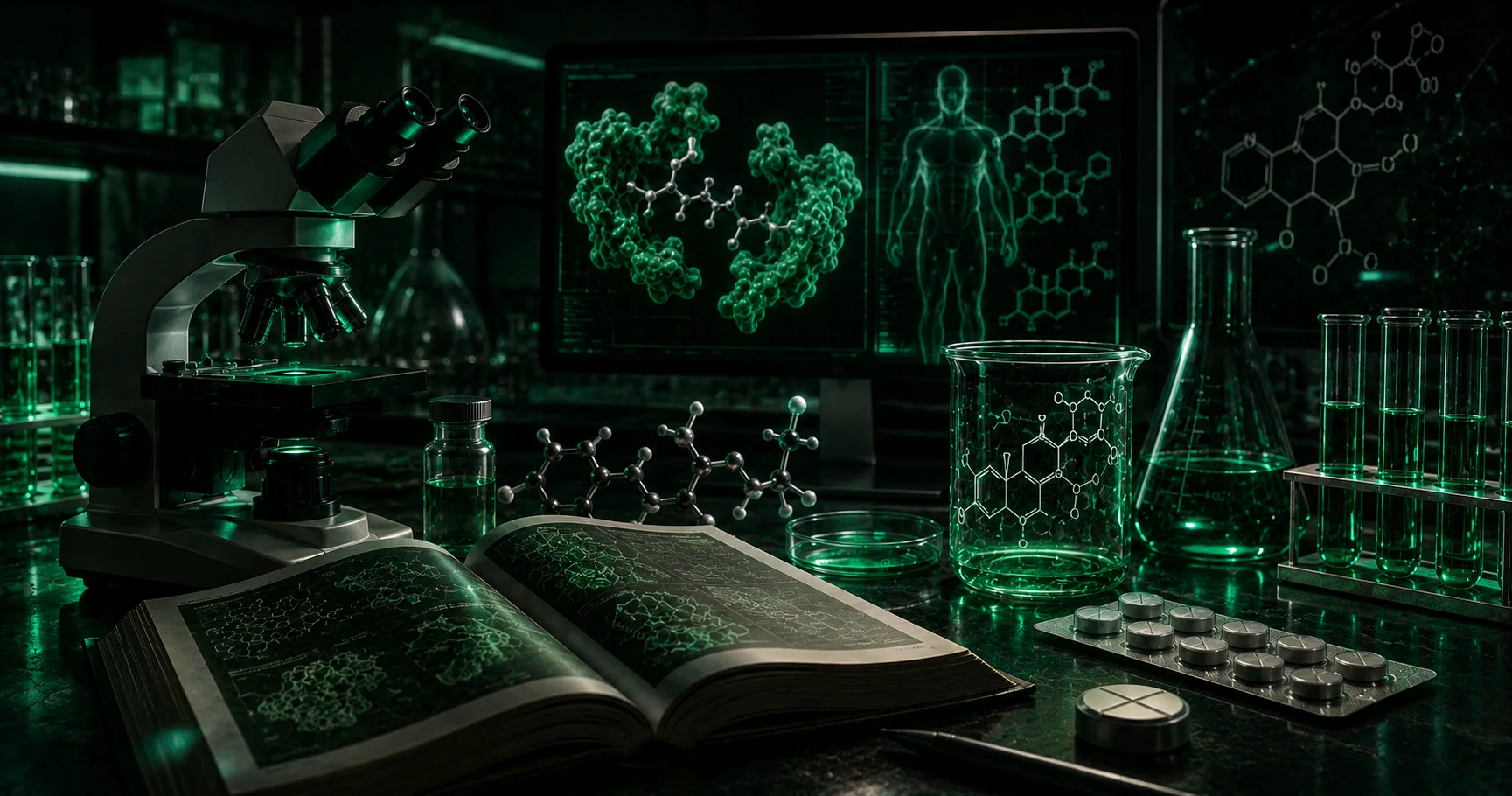
Proviron.org is an independent educational resource. We are not affiliated with Bayer, any pharmaceutical manufacturer, or healthcare provider. This content is for informational purposes only and does not constitute medical advice. Images on this site are illustrative artwork made for editorial purposes; they do not show real products, packaging or labels and are not an advertisement or an offer to sell.
Editorial Team
Comments (0)
Be the first to comment on this article.