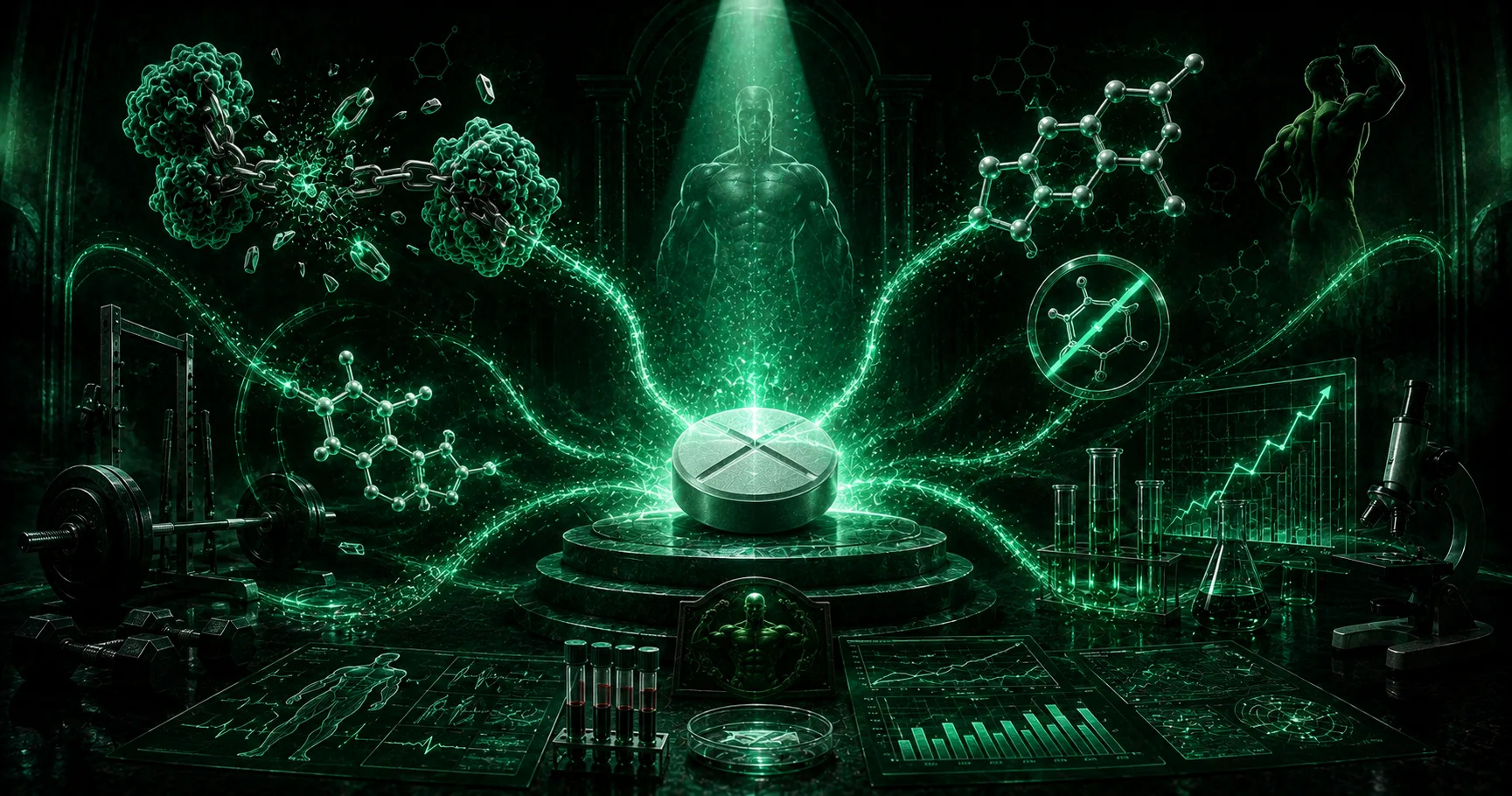
Proviron (Mesterolone): Complete Reference Guide for Men
Everything men need to know about Proviron (mesterolone): mechanism, dosing, cycle use, TRT integration, side effects, and comparisons with Masteron and DHT.
What Proviron Actually Does, and What It Does Not
Proviron (mesterolone) has been in clinical use since 1966, making it one of the oldest androgens still actively prescribed today. It is a dihydrotestosterone derivative, structurally identical to DHT except for a single methyl group added at the C1 position. That one structural modification is responsible for everything that makes proviron practically useful: the 1-methyl group blocks hepatic breakdown without requiring 17-alpha alkylation, which is why mesterolone carries essentially zero hepatotoxicity risk across decades of clinical monitoring. A shorter introduction is in what is Proviron.
Before anything else, a correction that most sources never make: proviron does not raise testosterone production. It does not stimulate the hypothalamic-pituitary-gonadal (HPG) axis. It does not increase LH or FSH output. It does not signal the testes to generate more testosterone. What it does, and does exceptionally well, is bind sex hormone binding globulin (SHBG) far more strongly than testosterone itself (a 1984 binding study found about four times the SHBG affinity of DHT, which already binds more strongly than testosterone).
SHBG is the transport protein that captures testosterone in the bloodstream and renders it biologically inactive at the androgen receptor level. When SHBG is elevated, a large fraction of total testosterone cannot bind to tissue receptors. Proviron competes for SHBG binding sites and wins, displacing bound testosterone and converting it from inactive to free and available. The result: a higher free testosterone percentage from the same total testosterone level. This distinction is critical and almost universally conflated in competing articles, proviron raises free testosterone by freeing what is already present, not by manufacturing more.
At 50mg/day, Proviron lowers SHBG; in a 2014 study of 34 men given 50 mg a day for two months, SHBG, total testosterone and estradiol fell and the free share of testosterone rose, while measured free testosterone did not change.
There is also a weak aromatase inhibition component, but it is routinely overstated. At practical doses of 25-75mg/day, the aromatase inhibitor activity is modest. The 2014 study found estradiol fell at 50mg/day, but the drop was modest and no study supports using mesterolone in place of an aromatase inhibitor. Proviron cannot replace anastrozole or exemestane for estrogen control on a heavy cycle. It contributes as a secondary mechanism, nothing more.
Mesterolone Chemistry and Why the Anabolic Ratio Is Misleading
Mesterolone's listed anabolic-to-androgenic ratio is 100-150:30-40, numbers that look promising until you understand the biochemistry behind them. In muscle tissue, the enzyme 3-alpha hydroxysteroid dehydrogenase (3-alpha HSD) rapidly converts mesterolone into an inactive metabolite. This is the same enzyme responsible for DHT's limited direct anabolic effect in skeletal muscle. Despite the high anabolic number in the ratio, proviron is functionally weak as a muscle-building agent because the molecule is inactivated at the target site.
The practical conclusion: proviron benefits do not include meaningful mass accumulation. Its value lies in androgenic activity at sites where 3-alpha HSD activity is low, including libido-governing brain regions, skin, and androgen-sensitive connective tissue, combined with its SHBG displacement mechanism.
The non-17-alpha-alkylated structure is a significant practical advantage. Virtually every other oral anabolic, dianabol, anavar, winstrol, relies on 17-alpha alkylation to survive first-pass liver metabolism, and all carry a corresponding hepatotoxic burden. Mesterolone uses the 1-methyl C1 structural approach instead. The liver largely leaves it intact without enzymatic modification that damages hepatocytes. Across decades of prescribed use, mesterolone has not produced clinically significant liver enzyme elevations at therapeutic doses. It is one of the safest oral androgens by liver profile.
Half-Life and Dosing Timing
The half-life of mesterolone is 12-13 hours. A single daily dose therefore produces blood levels that decline substantially before the next morning administration. For stable androgenic activity and consistent SHBG binding throughout the day, split dosing is the correct approach: one dose in the morning and one in the evening. A 50mg/day protocol runs as 25mg upon waking and 25mg with the evening meal. Detection windows and steady state are in the Proviron half life guide.
Proviron Dosage: Medical Protocols and Bodybuilding Applications
The official Bayer prescribing information (Proviron 25mg SmPC, November 2023) specifies the following for male hypogonadism treatment: initial phase at three tablets of 25mg per day (75mg total), with maintenance dropping to two tablets per day (50mg total). These are conservative, well-established therapeutic figures from a pharmaceutical manufacturer with over 50 years of clinical data on the compound. Goal-by-goal protocols are in the Proviron dosage guide and the Proviron 25mg tablet guide.
For male infertility and oligospermia, a primary medical indication that bodybuilding-focused sources almost universally ignore, the clinical dosing protocol runs 75-100mg/day over several months. This application has controlled trial data demonstrating improvements in sperm motility and count. Men with fertility concerns should know this exists as a validated clinical option.
Hypogonadism (initial)
75mg
4-6 weeks
Yes (3x25mg)
Hypogonadism (maintenance)
50mg
Ongoing
Yes (2x25mg)
Male infertility / oligospermia
75-100mg
Several months
Yes
On-cycle SHBG control
25-50mg
Duration of cycle
Yes
Pronounced free T + hardening
50-100mg
Duration of cycle
Yes
For bodybuilding applications, proviron dosage falls into two functional tiers. The lower tier, 25-50mg/day, is sufficient for SHBG suppression and libido support during a cycle. At this range, most men will see a meaningful increase in free testosterone percentage and subjective androgenic wellbeing without significant side effect burden. The upper tier, 50-100mg/day, produces more pronounced androgenic effects, including the aesthetic "hardening" or drying effect that proviron cycle users often report, which is a combination of SHBG displacement, mild estrogen reduction, and direct androgenic activity at skin-level tissue.
Proviron 25mg split twice daily is effective as a starting dose for TRT optimization in men with SHBG above 50 nmol/L, no need to open at 50mg when 12.5mg morning and evening achieves measurable SHBG reduction within two weeks.
Proviron Cycle Use, TRT Integration, and Standalone Protocols
On-Cycle Use
In a standard cycle context, proviron benefits the user primarily by increasing the free fraction of the base testosterone being administered. A man running 500mg/week of testosterone enanthate will have high total testosterone, but SHBG tends to rise in response to elevated androgens, capturing some of the circulating testosterone and reducing the effective free fraction. Adding proviron displaces SHBG competitively, allowing more of the injected testosterone to remain biologically active at androgen receptors. Full cycle structures are in the Proviron cycle guide.
At 25-50mg/day within a cycle where exogenous testosterone is already present, the mild suppressive potential of mesterolone on LH and FSH is largely irrelevant, LH and FSH are already fully suppressed by the testosterone base. The suppression concern matters much more in standalone or PCT contexts.
Proviron TRT Integration
For men on testosterone replacement therapy, proviron TRT use has grown as a tool for managing persistently elevated SHBG. Some men on TRT show adequate total testosterone levels on bloodwork but suboptimal free testosterone, leaving symptoms of low T partially unresolved despite the prescribed dose. Adding low-dose mesterolone, typically 25-50mg/day, shifts the free-to-total ratio favorably without requiring a testosterone dose increase or changing the primary protocol structure. Protocol and bloodwork details: Proviron with TRT.
This makes pharmacological sense: mesterolone does not interfere with exogenous testosterone administration, does not significantly alter hematocrit, and at these doses does not meaningfully increase estrogenic load. It is a targeted intervention for a specific bloodwork problem.
Standalone Use
Using proviron without a testosterone base is legitimate for men seeking mild androgenic support without full cycle commitment. As a standalone, it provides androgenic activity at DHT-sensitive tissue sites, mild SHBG suppression, and the libido and psychological wellbeing improvements associated with DHT-pathway signaling. It will not produce significant lean mass gains. Suppression of LH and FSH at doses of 25-50mg/day standalone is typically minimal, but bloodwork should confirm this, not assumption.
Proviron Side Effects: What the Bloodwork Actually Shows
The standard androgen side effect profile applies to mesterolone, with important nuances that most sources either skip or misrepresent. The complete risk profile is in Proviron side effects, and the erectile question in can Proviron cause ED.
Hair loss: As a DHT derivative, mesterolone activates androgen receptors in scalp follicles. Men with genetic androgenic alopecia, or a family history indicating susceptibility, should treat proviron side effects on the scalp as a real risk. The effect is dose-dependent: 25mg/day carries meaningfully lower risk than 100mg/day. It cannot be dismissed based on the claim that proviron is "mild."
Prostate: DHT-pathway compounds increase PSA and can stimulate prostate tissue over time. Men with preexisting benign prostatic hyperplasia or elevated baseline PSA should approach mesterolone with bloodwork monitoring of PSA at baseline and at 8-12 weeks.
Acne: Androgenic stimulation of sebaceous glands is a consistent risk. Men who respond to other androgens with acne should expect some degree of proviron side effects in this category, dose-dependent.
LH/FSH suppression: correcting the myth: A large number of competitor articles repeat the claim that proviron is non-suppressive. This is incorrect above approximately 75mg/day. At doses of 100mg/day or higher, measurable LH and FSH suppression has been documented in clinical literature. At 25-50mg/day the effect is minimal for most men, but it is dose-dependent, not absent. Any man using mesterolone standalone for an extended period should include LH, FSH, and total and free testosterone in their bloodwork to verify the actual hormonal impact.
Lipid profile: Like all androgens, mesterolone suppresses HDL cholesterol to some degree. The effect at 25-50mg/day is modest in most studies but should not be assumed away, include a lipid panel in routine bloodwork monitoring.
Hepatotoxicity: This is one of the real differentiating advantages of mesterolone over other oral androgens. Liver enzymes (ALT, AST) are not expected to rise with mesterolone at any reasonable dose. This is a structural consequence of the non-17-alpha-alkylated design and represents a clinically important safety advantage.
Proviron vs Masteron, DHT, and Anavar: Practical Comparisons
Proviron vs Masteron (drostanolone): Both are DHT derivatives, both bind SHBG effectively, both provide androgenic activity without estrogenic conversion or aromatization. The key differences are route of administration and relative potency. Masteron is injectable, has a longer active half-life (propionate ester: 2-3 days; enanthate ester: 5-7 days), and is generally considered more potent milligram-for-milligram in androgenic effect and muscle hardening. Proviron is oral, requires split daily dosing to maintain steady blood levels, and is more accessible in a pharmaceutical clinical context. For men who prefer or require oral administration, mesterolone is the practical DHT-derivative option. Sourcing and pricing: Proviron for sale.
Proviron vs DHT itself: Dihydrotestosterone administered exogenously is metabolized so rapidly it is not practical for sustained clinical use. The 1-methyl group at C1 in mesterolone is precisely what provides metabolic stability and oral bioavailability, it is the structural solution to DHT's pharmacokinetic limitations.
Proviron vs Anavar (oxandrolone): These are frequently compared as "mild oral androgens," but they occupy different functional niches. Anavar has real anabolic activity in muscle tissue, it does not suffer the 3-alpha HSD inactivation problem that limits mesterolone in muscle. Anavar produces lean mass retention and gains; proviron generally does not. However, anavar is 17-alpha alkylated and carries meaningful liver stress with prolonged use; mesterolone does not. They serve different purposes and are sometimes stacked together, anavar for anabolic stimulus, proviron for SHBG displacement and androgenic support, because they do not meaningfully duplicate each other.
Male Fertility and Mesterolone: The Clinical Application Competitors Skip
This is the most consistently ignored application in bodybuilding-oriented content, despite being a primary approved medical indication. Mesterolone has been prescribed for male factor infertility, specifically oligospermia, since the 1970s. The proposed mechanism involves improving the androgen environment within the testes, enhancing sperm maturation through Sertoli cell activity, and improving sperm motility through DHT-pathway signaling. The clinical data are reviewed in mesterolone pharmacology; community reports are collected in Proviron Reddit.
Clinical trials at 75-100mg/day over three to six months have demonstrated statistically significant improvements in sperm count and motility in oligospermic men. This is controlled clinical evidence, not anecdote.
The practical implication for men in the bodybuilding space: if fertility is a current concern, due to prior cycle-induced suppression, preexisting oligospermia, or a planned pregnancy, mesterolone at 75-100mg/day is a clinically validated intervention. It is not experimental. This application deserves the same coverage as the cycle use and TRT use cases, and the dosing overlap with hypogonadism treatment means the compound can serve both purposes simultaneously.
Proviron (mesterolone) is used medically for male hypogonadism and oligospermia-related infertility. In bodybuilding and TRT contexts, it is used to bind SHBG and increase free testosterone percentage, provide androgenic support and libido improvement on cycle, and produce mild aesthetic hardening effects. It does not stimulate testosterone production directly.
Proviron does not raise total testosterone production. It binds SHBG far more strongly than testosterone, displacing bound testosterone and increasing the free fraction. Total testosterone on bloodwork is unchanged, what rises is the free and active portion. This is a displacement mechanism, not HPG axis stimulation.
Proviron has weak, dose-dependent aromatase inhibitor activity. Estradiol fell modestly at 50mg/day in the 2014 study, which is a secondary effect and not enough to serve as the primary AI on a testosterone or aromatizing compound cycle. It cannot replace anastrozole or exemestane. Treat it as a supporting contributor, not a standalone aromatase inhibitor.
Yes: proviron side effects include acceleration of androgenic alopecia in genetically predisposed men. As a DHT derivative, mesterolone activates androgen receptors in scalp follicles. The risk is dose-dependent: 25mg/day carries lower exposure than 75mg/day. Men with a family history of male pattern baldness should treat mesterolone as a meaningful accelerant and monitor accordingly.
Both are DHT derivatives that suppress SHBG and provide androgenic activity without aromatization. Masteron is injectable with a longer half-life and greater milligram-for-milligram androgenic potency. Proviron is oral, requires split twice-daily dosing due to its 12-13 hour half-life, and is more accessible in pharmaceutical settings. For men requiring an oral DHT-derivative option, mesterolone is the practical choice.
Proviron during PCT is problematic above low doses. Mesterolone suppresses LH and FSH measurably above 75mg/day, directly counteracting the HPG axis recovery that post-cycle therapy is designed to achieve. At 25mg/day the effect is minimal for most men, but the standard advice is to complete PCT first and add Proviron afterward once bloodwork confirms recovery.
Proviron.org is an independent educational resource. We are not affiliated with Bayer, any pharmaceutical manufacturer, or healthcare provider. This content is for informational purposes only and does not constitute medical advice. Images on this site are illustrative artwork made for editorial purposes; they do not show real products, packaging or labels and are not an advertisement or an offer to sell.
Editorial Team
Comments (0)
Be the first to comment on this article.